

Friar Alexander Lam: “Shepherds are messengers, not owners of the Gospel”
Friar Alexander Lam, Vicar General of the Augustinians, analyzes Leo XIV's message to the bishops of Peru: communion, closeness, unity, and justice.
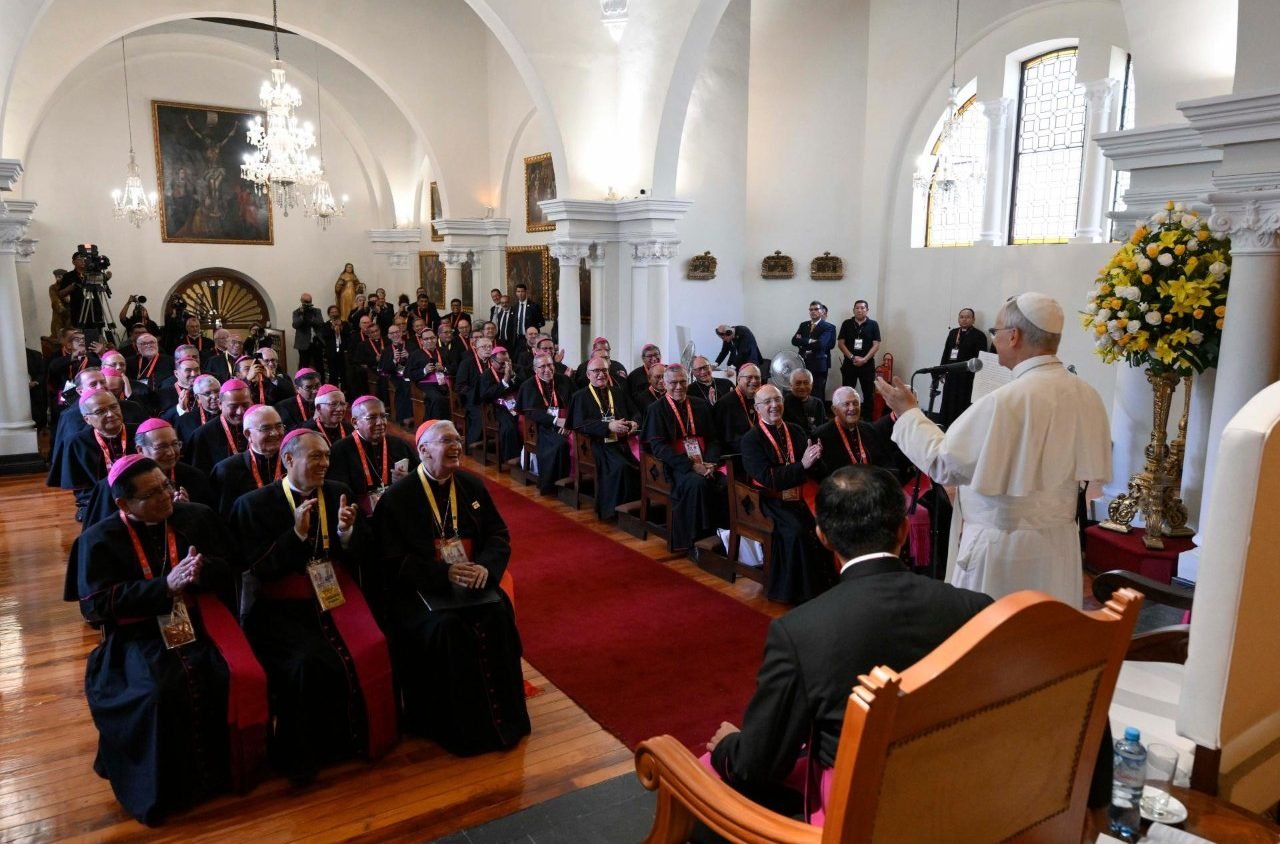
The Vicar General of the Order of Saint Augustine, Friar Alexander Lam, OSA, who is accompanying Pope Leo XIV during his apostolic visit to Peru, speaks with Augustinians with the Pope about the Pontiff’s message to the Peruvian bishops. Communion, closeness to the people, episcopal unity, and a commitment to justice are some of the keys to a speech that invites the Church to keep walking forward.
There are paths that unite cities and towns, but there are also paths that build communion, bring hearts closer, and allow us to discover God’s presence in history. This was one of the images chosen by Leo XIV during his encounter with the bishops of Peru, held this Thursday, November 12, in Lima.
Taking the Great Inca Trail as a reference, the Holy Father recalled that the Church is also called to be a path of communion and hope. It is an image deeply linked to Peruvian history, yet it contains a message for the entire Church.
At Augustinians with the Pope, we spoke with Friar Alexander Lam, OSA, Vicar General of the Order of Saint Augustine, who is experiencing this apostolic visit firsthand. Through four questions, the Augustinian religious delves into the meaning of the Pontiff’s words and the challenges they pose for the evangelizing mission.
The Church is not the owner of the path; it is called to walk it
For Friar Alexander, the reference to the Inca Trail finds its deepest meaning in Jesus Christ himself, who is presented in the Gospel of John as “the way, the truth, and the life” (Jn 14:6).
The image used by Leo XIV serves as a reminder that the Church does not exist to remain stationary, but to announce Christ and go out to meet people.
“They are messengers, they are not owners, they are messengers,” explains the Vicar General when referring to the mission of the bishops. He adds a fundamental idea: “The path is not for staying there, but for walking it.”
This invitation takes on a special dimension when considering the figure of Saint Turibius of Mogrovejo, whose canonization marks its three-hundredth anniversary in 2026. The holy archbishop traveled through extensive territories to meet with communities, learn about their needs, and announce the Gospel to them.
Friar Alexander recalls precisely that missionary dimension: Saint Turibius “traveled, arrived, united, linked, knew, and proclaimed.”
The message is clear: evangelizing requires getting into motion. The Church cannot limit itself to waiting for people to come to it; it must travel the paths where the lives of its people unfold.
Walking with the people means knowing them and sharing their lives
One of Leo XIV’s most significant exhortations to the bishops was the need to never stop walking with the Peruvian people. But how does that closeness translate into the daily life of the Church?
Friar Alexander places the answer within the horizon of synodality. It is not enough to talk about proximity; it is necessary to know the reality of the people, listen to their concerns, and share their joys and difficulties.
For the Vicar General, bishops must “know the reality of their people, unite with it, walk with it, and live it with them.”
This attitude evokes one of the most beautiful images of the Gospel: that of the Good Shepherd who knows his sheep and is recognized by them.
Closeness, therefore, cannot be reduced to an occasional presence. It is a relationship built through listening, accompaniment, and shared life.
Friar Alexander explains that shepherds also receive much from the communities they serve. They are men who “receive and are enriched by the faith of their people,” but who at the same time have the responsibility to accompany, guide, and teach.
The pastoral mission consists of creating a true community of faith with the faithful, where everyone can recognize each other as brothers and sisters and walk together toward Christ. This communion also begins among the bishops themselves.
Reflecting on the Pope’s call for episcopal unity, the Augustinian religious recalls that Leo XIV echoed the words spoken by Francis during his visit to Peru in 2018.
The Gospel, he explains, is a proclamation of peace and unity, and that unity must first be manifested among those who have the responsibility of proclaiming it.
For Friar Alexander, communion among bishops must overcome differences in perspective and recognize the richness that each one can contribute from their own diversity.
The fundamental thing is that they never forget “that they are brothers among themselves.”
From that fraternity, a more credible Church is born, capable of announcing unity not only with words but through the testimony of its own shepherds.
Peace and justice are concrete demands of the Gospel
The Holy Father’s speech also challenges the Church regarding the wounds that cut through Peruvian society: violence, corruption, poverty, and abuses committed in ecclesial contexts.
For Friar Alexander, one of the central aspects of Leo XIV’s message is the inseparable relationship between peace and justice.
“The proclamation of the Gospel, the generation of communion, also goes hand in hand with fighting for justice and peace,” he affirms.
Evangelization, therefore, cannot remain indifferent to human suffering. Christian faith demands a concrete response to the needs of those living in vulnerable situations.
The Vicar General explains that the Church is called to serve and remain close to those who suffer in the various dimensions of their existence: material, personal, social, psychological, and spiritual. This closeness constitutes an expression of the authenticity of faith.
“Jesus makes himself present in the one in need,” recalls Friar Alexander, emphasizing that the commitment to the most vulnerable is not a secondary task, but a requirement of Christian life.
In this light, the Pope’s words on justice, the protection of vulnerable people, and the responsibility of the Church take on special relevance. Communion cannot be built by ignoring wounds, but by committing to truth, justice, and the care of those who have suffered.
Friar Alexander takes this reflection even further. Those who teach, catechize, announce the Gospel, or profess their faith have a moral responsibility that is born from the encounter with Christ.
That commitment, he explains, comes from having “accepted and embraced, and letting oneself be embraced by, the love of God.”
A Church that walks because it loves
The reflections of the Vicar General of the Order of Saint Augustine reveal a single conviction behind the words of Leo XIV: the Church is called to walk because its mission is to meet people and announce the love of Jesus Christ to them.
Walking means listening, knowing, accompanying, building fraternity, and committing to justice. It means recognizing that the Gospel is not a possession, but a gift received to be shared.
In a country where paths have united territories and cultures for centuries, Leo XIV invites his shepherds to continue traveling the trails of their people.
Because, as Friar Alexander Lam reminds us, shepherds are not the owners of the path. They are messengers of Him who is the Way.