
Saint Thomas of Villanova: the Augustinian bishop quoted by Leo XIV at the vigil in the Plaza de Lima
Discover who Saint Thomas of Villanova was, the Augustinian archbishop recalled by Pope Leo XIV during the youth vigil in Madrid’s Plaza de Lima.
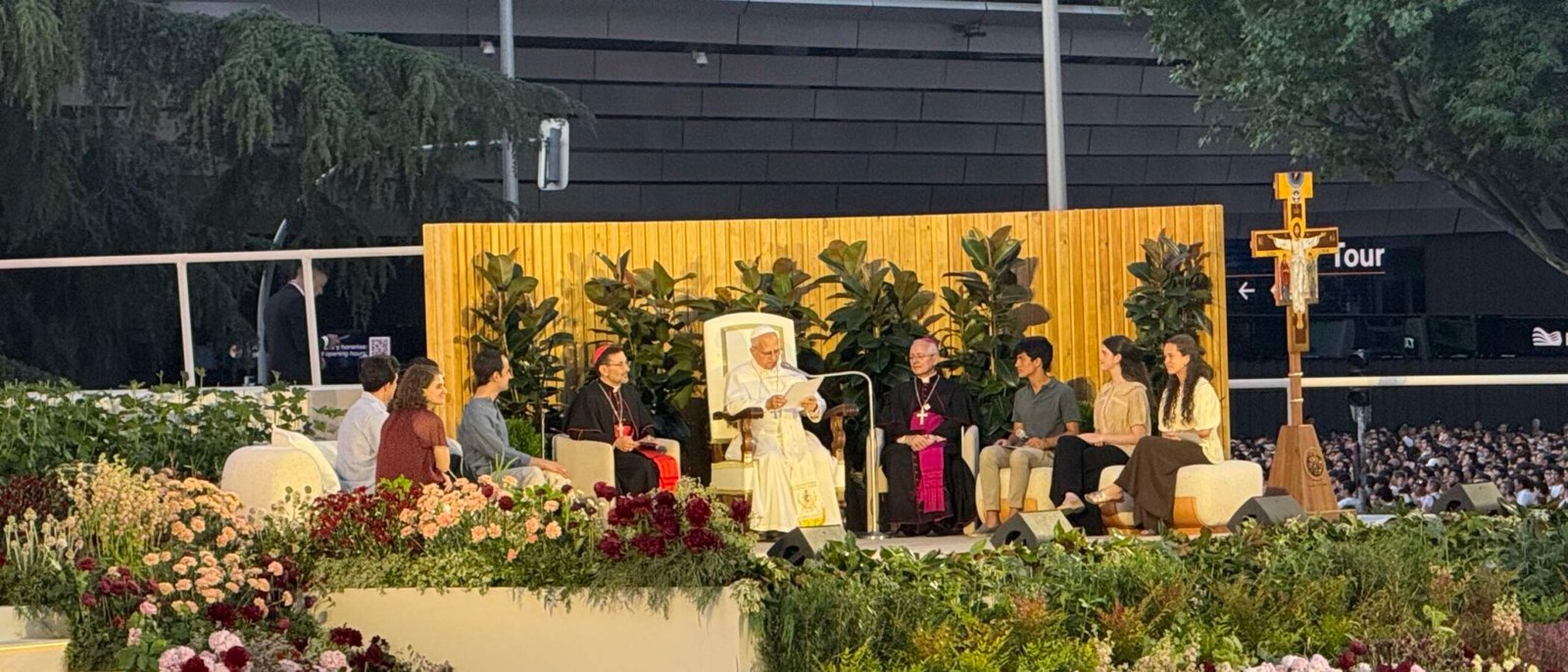
The Pope recalled one of the great saints of the Augustinian tradition during his meeting with young people in Madrid, proposing him as an example of faith, charity and commitment to those most in need.
Among the spiritual references that marked the vigil presided over by Pope Leo XIV in Madrid’s Plaza de Lima, one resonated especially strongly with the Augustinian family: the mention of Saint Thomas of Villanova, the Augustinian friar who became Archbishop of Valencia and whom the Church remembers as one of the greatest examples of charity of the 16th century.
Recalling this saint was no accident. Leo XIV wanted to present young people with a deeply relevant model of holiness: a man who united the search for God, love for the Church and concrete care for the poor in an age of great social challenges.
An Augustinian friar at the service of those most in need
Tomás García Martínez was born in Fuenllana (Ciudad Real) around 1486. After his university studies he entered the Order of Saint Augustine, where he stood out for his intelligence, his gift for leadership and a deep spiritual life.
His fame as a preacher quickly spread throughout Spain. Yet, far from seeking honours, he lived simply and humbly, convinced that knowledge only makes sense when placed at the service of others.
In 1544 Emperor Charles V named him Archbishop of Valencia. In that role he carried out intense pastoral and social work that transformed the diocese. He personally visited hospitals and poor neighbourhoods, promoted charitable works and gave a large part of his resources to those who suffered most.
The “father of the poor”
History has preserved many accounts of his extraordinary generosity. It is said that the doors of his residence remained open to anyone who needed help, and that no one in need left without receiving comfort or support.
That is why he was popularly known as the “father of the poor”, a title that sums up the essence of his ministry as bishop. His life was a concrete translation of the Augustinian ideal: seeking God in community and serving Christ present in our brothers and sisters.
His influence was so deep that even Saint John of Ribera, one of his successors in Valencia, acknowledged the mark he had left on the local Church.
A timely message for young people
By recalling Saint Thomas of Villanova during the vigil in the Plaza de Lima, Leo XIV invited young people to look beyond a superficial faith and discover a spirituality capable of transforming reality.
The life of this Augustinian saint shows that holiness does not lie in doing extraordinary things, but in responding generously to the needs of each age. In a society marked by indifference, poverty and loneliness, his example remains a call to live the Gospel authentically.
A saint very present in the Augustinian family
Saint Thomas of Villanova remains one of the best-loved and most representative figures of Augustinian spirituality. Today his legacy inspires schools, parishes, religious communities and social projects all over the world.
During these days of Leo XIV’s visit to Spain, he becomes relevant once again as a witness of a Church that is close, serving and committed to the most vulnerable: precisely the Church the Pope proposes to build with the new generations.
The Holy Father’s reference in the Plaza de Lima has allowed thousands of young people to rediscover this great Augustinian saint, whose life continues to remind us that true greatness is born of love for God and service to others.