
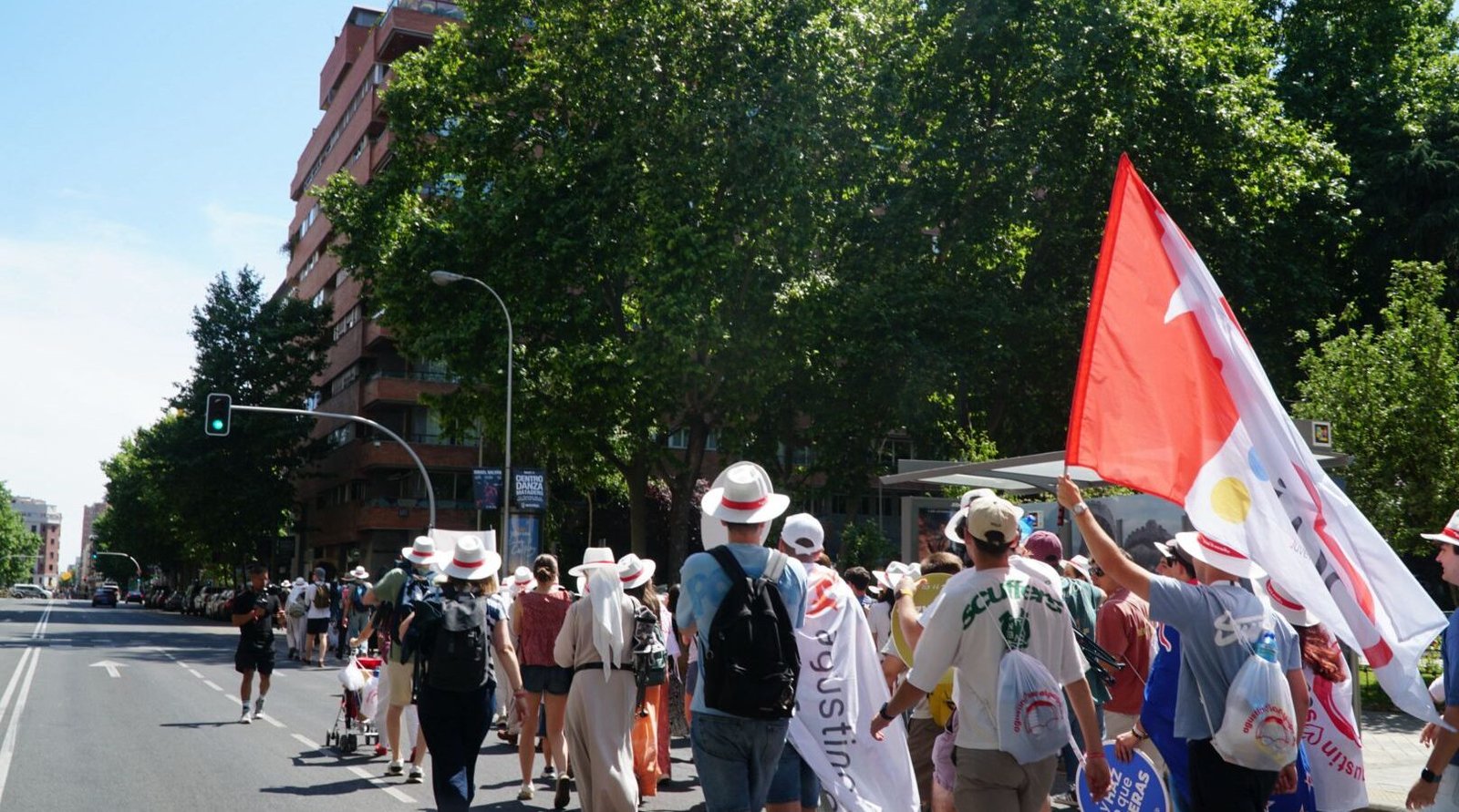
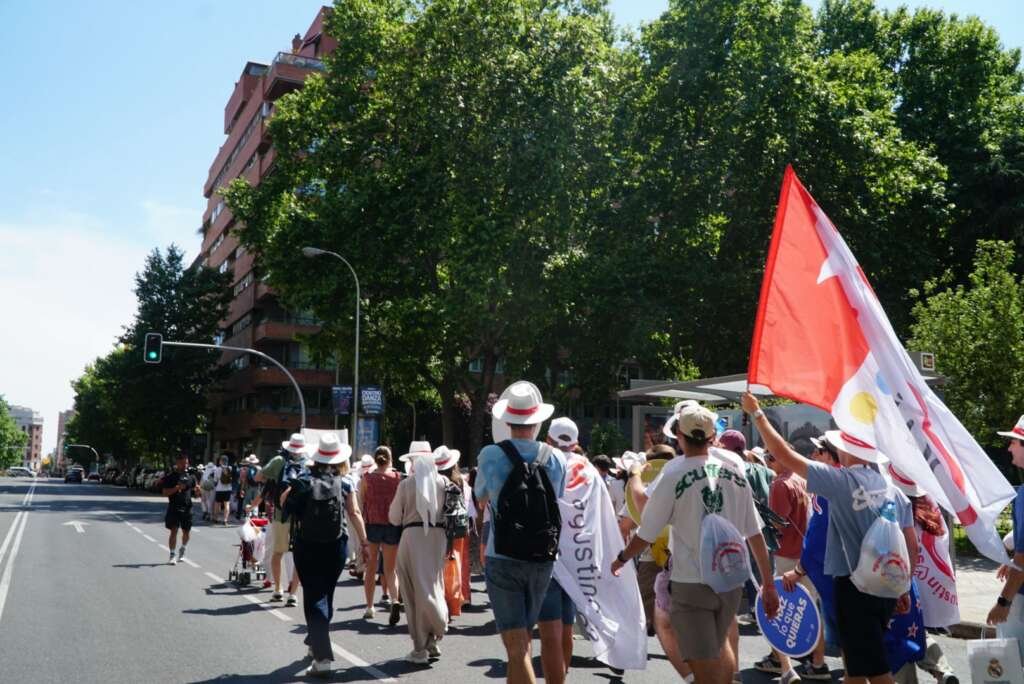
Pope Leo agreed to answer some of the young people’s questions in a new format, livelier than a traditional speech. From the very beginning one could sense Augustinian restlessness, since the young people themselves started by acknowledging the Pope’s bond with Saint Augustine, taking it for granted that he is the great point of reference in the Pontiff’s life.
In fact, although the Pope quoted Saint Augustine explicitly only once, referring to Confessions 8, 27, where Augustine reflects that if the saints could do it, so could he: “Contemplating the lives of these saints, like Saint Augustine, I said to myself: if they could, why can’t I?” Even so, his spirituality could be felt in everything he said.
Nor should this surprise us, since Augustine touched every branch of theology and spirituality, and he seems present in all theological reflection. Moreover, Pope Leo has a deep formation in the Augustinian spiritual tradition, and it shows in all his reflections. Augustine’s legacy has shaped reflection on the great human questions, as the Pope acknowledged when he said: “we all know that Saint Augustine is a very important figure for the whole Church”.
The Pope invited young people to take as role models “examples of a good life that are attractive”, to persevere in prayer, “expressing what you feel in your hearts”, in charity and in obedience, knowing that “He listens to you and answers you”, to immerse themselves in silence and recollection, and to “listen to his living Word, which is Christ, whose voice continues to resound in the Church, which is his body”.
In his words he spoke of listening, dialogue and interiority, themes very present in Augustine and in his life.
He also stressed the importance of seeking the truth together, a question on which Augustine will always be a reference: “For the truth is common to all. It is neither mine nor yours, nor this person’s nor that one’s; it is common to all. And perhaps it is in the middle so that all who love the truth may be gathered around it” (Exposition on Psalm 75, 17).
And to seek this truth with courage. Augustine highlights this when he says: “If wisdom and truth are not loved with all the strength of the spirit, they cannot be known at all; but if they are sought as they deserve, they do not withdraw or hide from those who love them” (On the Morals of the Catholic Church 1, 17, 31).
The Pope entrusted young people with a great mission: to be human, to seek justice and to love an upright life: “The mission I entrust to you is precisely this: that you be human. Yes, be human! Men and women of flesh and blood. Not appearances, but trustworthy faces. People who seek justice because they hunger for it, as for their daily bread. People who desire an honest and upright life, because they gladly do to others what they would want others to do to them.”
And he ended with words of encouragement: “You can change history. Do it with love.”